
Eastpointe City Directory Collections
Eastpointe’s confirmed local city directory run is small but useful: 1942, 1949, 1954-55, and 1957-58. The public-library house-history guide identifies those volumes as reference-only at Eastpointe Public Library. That status matters. A reader can consult the book with staff help, but should ask before expecting a scan or a copy. Each edition can identify an occupant, a street address, and sometimes additional household detail. The gaps are real, so no entry should be treated as an annual account of everyone at an address.
| Collection | Years | Where Held | Access |
|---|---|---|---|
| Eastpointe Public Library city directories | 1942; 1949; 1954-55; 1957-58 | Eastpointe Memorial Library local-history/reference collection | Reference-only; ask staff about use and copying |
| Mount Clemens city-directory master index | 1896-1966 | Mount Clemens Public Library / MCGG | Index and copy-request service; this is a Mount Clemens run |
| Polk, Bresser, and other directories | Publisher-specific; no continuous Eastpointe run verified | Library of Michigan print, rare-book, and microfilm areas | On-site and participating-library pathways |
| Macomb County government guidebooks | 1973-74 through 2023-24, with listed gaps | Macomb County directory archive | PDF office and service guidebooks, not household directories |
The household books are different from the county guidebook archive. The historical Eastpointe volumes are household and address sources. Macomb’s later guidebooks identify public offices, courts, services, and municipalities. Keeping those artifacts separate avoids turning an office directory into a resident record.
Note: Preserve the directory year, publisher, page, spelling, and city heading when recording a result for later comparison.
Eastpointe City Directory Name Bridge
Older research may not use today’s city name. The area was Erin Township before the Village of Halfway formed in 1924, became East Detroit in 1929, and took the Eastpointe name in 1992. A pre-1992 clipping or directory heading that says East Detroit can concern the present city, but the connection still needs a parcel, legal description, or other address evidence. Search both East Detroit and Eastpointe when a surname disappears between books, and retain the historical wording in a citation.
- Before 1924: check Erin Township as the local identity.
- 1924: the Village of Halfway provides a new place-name path.
- 1929: use East Detroit in directories, clippings, and related records.
- 1992: use Eastpointe, while carrying older headings forward as search variants.
The date bridge also explains why adjacent communities can appear in a search. Roseville, Warren, Detroit, and St. Clair Shores sit close enough to create similar-looking locality references. A street number by itself is not enough when a record lacks its city heading.
Eastpointe City Directories Beyond Shelves
Michigan Memories’ East Side Detroit collection is a digitized-local-history route with keyword, type, institution, collection, language, and date filters. It is useful for locating related material, but the inspected results did not establish a page-level Eastpointe directory scan. Search the portal as a lead, then cite the original library or custodian when a record needs to be confirmed.
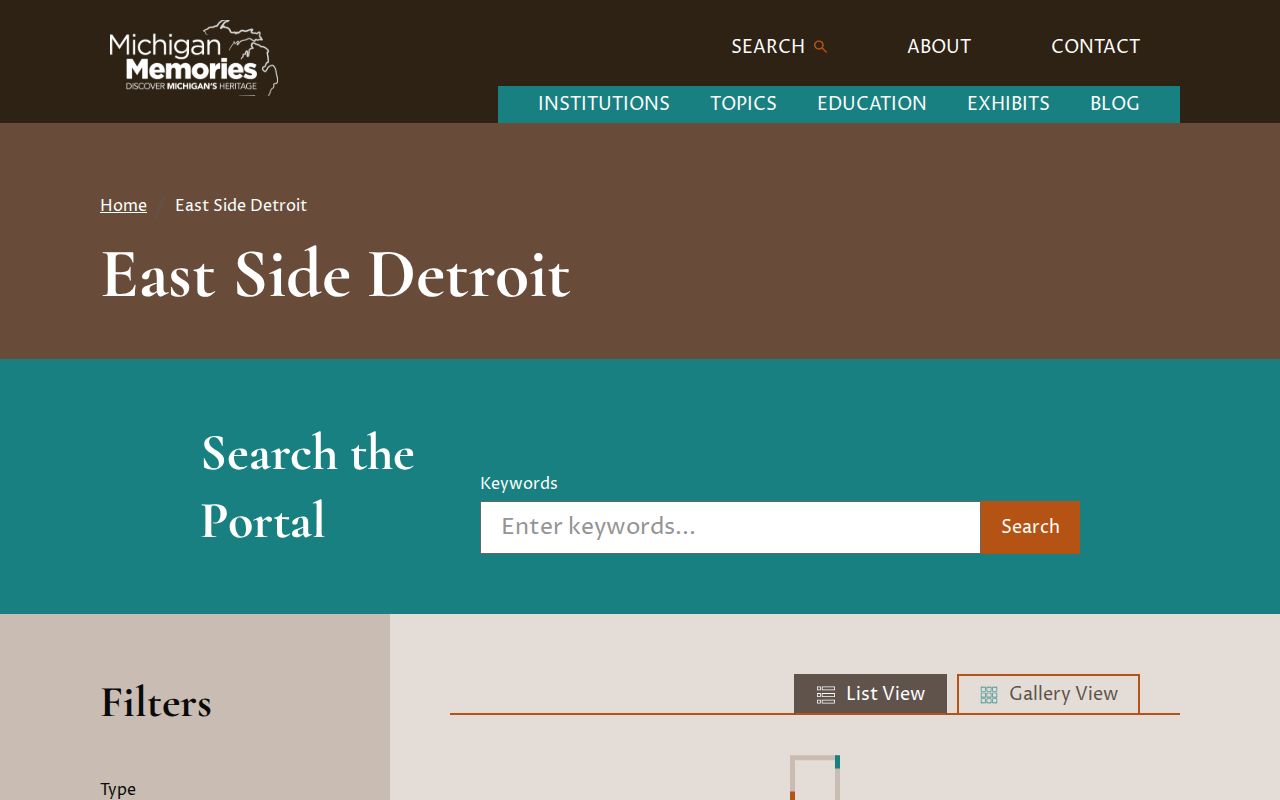
The filters shown in the collection can narrow a broad local-history search before a library request is made. They do not prove that every Eastpointe volume is online or that a search result is a complete directory page.
The Library of Michigan city-directory guide identifies print directories, rare books, microfilm or fiche, and participating-library access to Ancestry Library Edition and HeritageQuest. Its collection description is a route to material, not evidence that a particular Eastpointe year is available in every format. For a missing local year, ask the holding library before making a trip or relying on a database title alone.
Polk material can be organized by surname, then by street with house numbers, and may include a phone section and owner/renter marks. Bresser criss-cross books place entries in street and house order and may identify the head of household, phone, year first listed, new arrival or relocation, and building detail. Those publisher patterns are useful reading aids, but the actual volume controls which fields appear.
Reading Eastpointe City Directory Entries
Read the actual entry before drawing a conclusion. The available field inventory comes from the Library of Michigan’s directory description and the Roseville guide, not from an invented Eastpointe household. A surname section may lead to a street section, while another section may be arranged by phone number or address. Parentheses, initials, and shorthand can change meaning from one publisher to another, so photograph or copy the abbreviation key from the same volume.
| Name | Surname and given name, sometimes with spouse or household notation. |
|---|---|
| Listed activity | Occupation and, in some books, an associated organization or classified entry. |
| Address | Street and house number, sometimes an apartment, unit, or separate business address. |
| Tenure and phone | Owner/renter marks or a telephone listing when that publisher includes them. |
| Placement | Directory year, publisher, page, and the city heading needed for a reliable citation. |
Fields describe a historical listing, not a present residency confirmation. In particular, an owner/renter mark and a phone entry depend on the publisher and the volume. Compare them with the street section, a later edition, and the record custodian that holds any modern document.
- Criss-cross directory
- A directory arranged in street and house-number order rather than only by surname.
- Householder index
- An arrangement that points from a household name to an address or related listing.
- Abbreviation key
- The publisher’s explanation of its shorthand; read it before expanding initials or status notes.
Eastpointe City Directory Research Desk
Eastpointe Memorial Library, at 15875 Oak Street and 586-445-5096, is the most local starting point. The Heritage Alliance identifies an Eastpointe clipping file, books about Eastpointe, and East Detroit School files there. Start with the catalog for call numbers, then ask for the narrowest useful subject, date, address, or school query. The library is a research lead, not a public bulk roll of local residents.
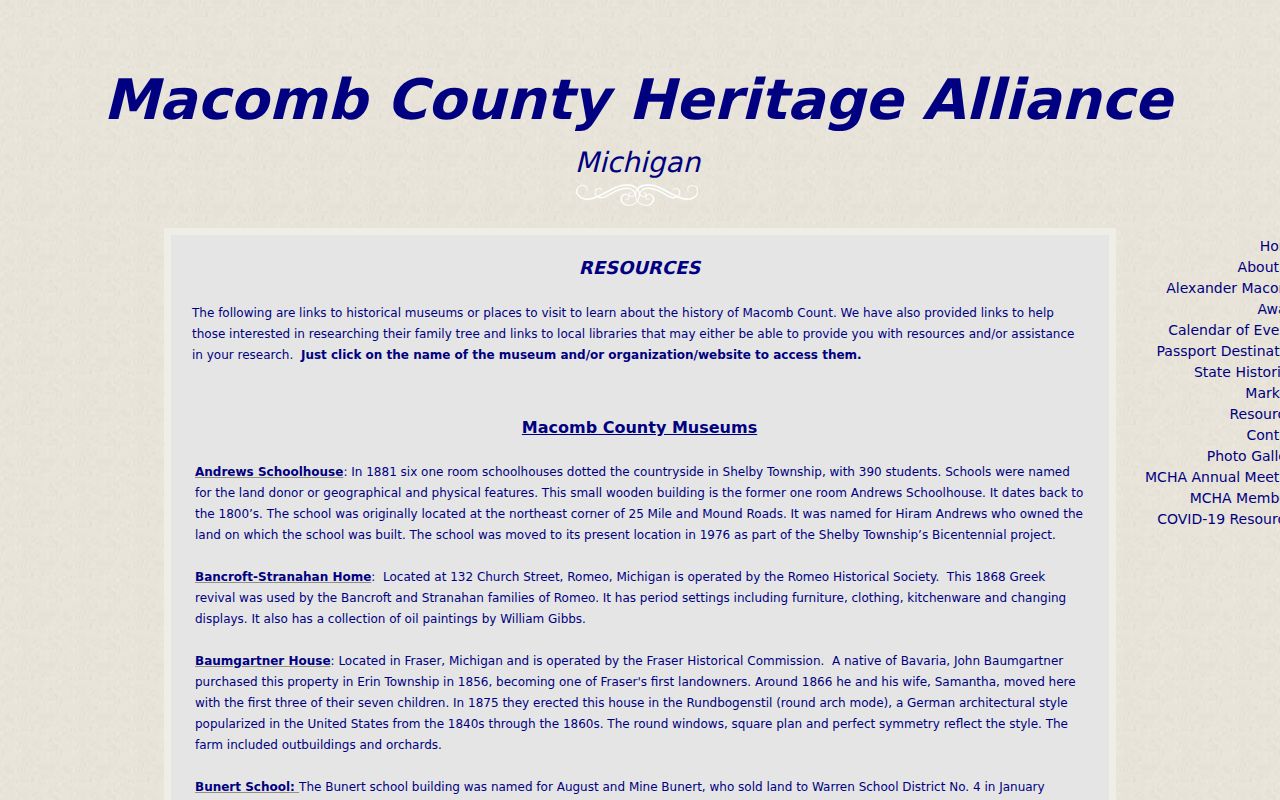
The historical-resource listing supports a request that joins a directory year to a clipping or school clue. That combination is often more useful than a broad surname search, especially where the local run skips several years.
Eastpointe Memorial Library
Use the local clipping file, Eastpointe books, and East Detroit School files. Ask staff about non-circulating items and permitted copying.
Mount Clemens Library / MCGG
Use county-scale obituary, funeral, probate, cemetery, court, directory, yearbook, and military indexes when a local volume supplies only a starting point.
Mount Clemens Public Library is at 150 Cass Avenue, Mount Clemens, with 586-469-6200. MCGG accepts mail or email requests and can send scans by email or copies by mail. Indexed database photocopies cost $4 each or three for $10 when index information is supplied; requests without index information cost $10 each. Verify library hours before travel.
Eastpointe City Directory Gaps Matter
The dated Eastpointe run itself is a records story. Four located editions, separated by years, create useful snapshots but not a continuous annual chain. Pair each book with the closest available census, deed, newspaper, probate, or school source. The federal census follows a 72-year public-release rule, so its available years must be checked rather than assumed. A missing name can reflect a gap, a variant spelling, a new municipal label, or an unlisted household.
Macomb’s record environment also changed over time. A county newsletter described records scattered after a 2013 fire and a centralized, climate-controlled storage project expected to operate in early 2026. That history is a reason to confirm current counter, terminal, and retrieval arrangements for older county material, rather than assuming an online index or a printed book covers every surviving item.
Note: A directory omission is a prompt to test another dated source, not proof that a person left the area.
Trace Eastpointe City Directories Carefully
Trace one household forward and backward in the confirmed Eastpointe volumes. Start with the best spelling, preserve it as printed, and move from the surname entry to the street section. Adjacent house numbers may reveal related households or simply nearby names, so record them as leads only. When the local run ends, pair the last address with an obituary, probate index, cemetery custodian, deed, or census record that can supply a date or relationship clue.
- Locate the surname in the earliest relevant Eastpointe volume and note page, address, spelling, and year.
- Read the street section for the same house number and nearby entries, without treating proximity as kinship.
- Compare the next available local volume, including East Detroit as a place-name variant when dates require it.
- Match a directory year to the appropriate publicly released census and verify the boundary or locality heading.
- Use the Mount Clemens obituary, funeral, probate, or yearbook indexes to seek an underlying page or file.
A direct internal next step is the Eastpointe resident lookup when a historical name needs confirmation through a current official custodian. That later search should keep the older directory’s date and address separate from any present record.
Eastpointe City Directory Companion Files
School and obituary material can make a thin directory entry more useful. Eastpointe Memorial’s East Detroit School files provide a controlled request path using a surname, school, and approximate year. Mount Clemens maintains high-school yearbook indexes from 1917 to the present for Mount Clemens High School, plus obituary and funeral leads. Ask for a page or an index citation, then examine the underlying source instead of repeating a secondary summary.
MCGG’s funeral-home master index spans 227 volumes from 17 homes, and its obituary index begins in 1941 with older material also noted. The library warns that not all Macomb newspapers are indexed, and Detroit newspapers or the Macomb Daily can have different coverage. A negative index result is therefore not a final answer.